Mostrando entradas con la etiqueta Natural Science. Mostrar todas las entradas

sábado, 20 de octubre de 2018

Natural Sciences Unit 1

How your eyes work (sense of sight):


How your ears work (sense of hearing): 


How your nose work (sense of smell):


How your tongue works (sense of taste):


Also, check out Padlet!


Hecho con Padlet

martes, 2 de octubre de 2018

The nervous system

Find out more about your amazing brain!


jueves, 20 de septiembre de 2018

How can I get a good mark?

I want a good mark in English, Natural Sciences and Social Sciences. What can I do? Read the two GUIDELINES posted on Padlet!


Hecho con Padlet

miércoles, 6 de junio de 2018

domingo, 20 de mayo de 2018

Natural Science Test unit 4: Thursday, 24th May

What do you have to know? 

  • Definition of energy: Energy is the ability to do work. Energy can´t be created or destroyed, it can only be transformed. 
  • Forms of energy: Mechanical (kinetic or potential), chemical, thermal, light, electrical, nuclear. You have to know examples and definition of these forms of energy. 
  • Common energy transformations: Cars and other means of transport (chemical- into kinetic and thermal), electric drills (electrizal- into thermal, light and kinetic), solar panels (light- into electrical) or food (calories). 
  • Sources of energy: Renewable (they are not limited) like hydrolectric, wind, solar or biofuels. And non-renewable (they are limited) like petroleum, natural gas, coal or uranium. You have to explain these sources.
  • Environment: Explain the problems that the non-renewable sources cause to the environment (acid rain, global warming, pollution). What are the three Rs? Explain them and give examples. 
This video is long, but it´s perfect to review all the contents.


lunes, 7 de mayo de 2018

Forms of energy

We are ready for the next unit! In this unit we are going to study different forms of energy. But, what is energy? It is the ability to do work. This video will help you to understand it better! 


jueves, 18 de enero de 2018

Unit 2 test: Tuesday 23th January

What do I have to know?
  • The five kingdoms: animals, plants, monerans, fungi and protista.
  • Vertebrate animals: mammals, reptiles, fish, birds and amphibians. (Examples and characteristics- body, respiration, extremities and reproduction.
  • Invertebrate animals: molluscs, echinoderms, coelenterates, annelids, porífera and arthropods. (Examples and characteristics- body, respiration and reproduction.
  • Plants: difference between seed plants and non-seed plants. Difference between angiosperms and gimnosperms. Examples of non-seed plants: ferns (spores are in the fronds) and mosses (rhizoids, spores are in capsules).
  • Fungi: mushrooms, yeast and mould. Body (three parts), reproduction and nutrition.  
  • Monerans: Unicellular (some have a tail), nutrition and reproduction. 
  • Protista: Algae and protozoa. Reproductiona and nutrition. 

The following videos can be difficult and they have extra information, however they can be helpful to understand the unit.


jueves, 11 de mayo de 2017

Science classes

Last weeks we studied science in a different way! We were tired of memorizing so we decided to go to the playground. We played a game in order to understand how atoms and molecules work. 


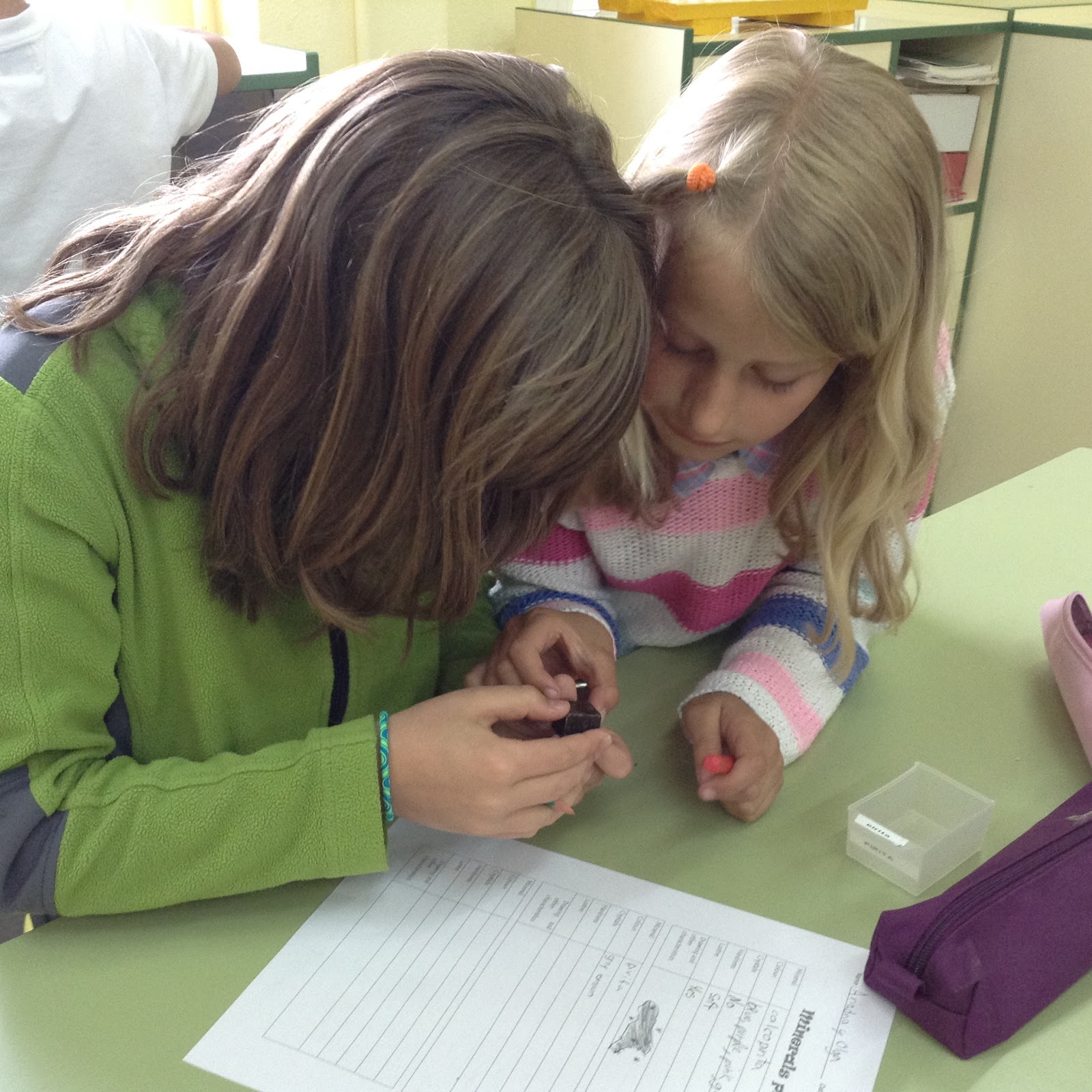
We also practised our geologist skills in the lab. We analized the different properties of some minerals. 


miércoles, 19 de abril de 2017

We love fruit!!!

After the experiment about how much sugar do you eat everyday, we have concluded that the best thing you can eat is fruit! Because it contains fructose, a natural type of sugar that is very healthy for your body! 


jueves, 30 de marzo de 2017

Last projects

We had many original projects last week! Damian and Ethan measured the blood pleasure of their classmates. 


Mateo, David and Miguel used a Buda instead of a pyramid to explain healthy food. And they also interviewed a doctor about food we should eat. Dario and Iván talked about jobs that provide first-aid services. 
 

 Adrián and Jose Manuel talked about a healthy diet and they created a school menu. 

 Ángela and Nuria explained the importance of blood donations. 

 Celia and Laura taught very useful instructions about first-aids. 

Ana and Lucía wrote a complete book about food and its benefits. Sofia and Ashley searched about some important invenctions for medicine.
 

 Enrique and Nacho created a food pyramid. As well as Rocío and Julia. 

 Olga and Ariadna searched about how to conserve food in order to prevent illnesses. 


 Joaquín and álvaro talked about medical invenctions and they created a video in which they interviewed Alexander Fleming. Here yo have the link to watch it again:


martes, 14 de marzo de 2017

New projects!

Last week we had some new projects. All of them were amazing! 

Raquel and Alexandra had a very creative idea. They organized a game to practise the food pyramid. Their project was beautiful and original. 

Jaime and Adrián made their presentation on power point. It was about medicines and inventions. They love technology!! 

Marta and Julia created a book to explain the properties of different food. They had a great idea and everyone loved it! 

Yago and Victor talked about healthy food with the slogan: Eat healthy, be happy! 
They described two types of menus: a healthy one and an unhealthy one. 
Very good kids! 

lunes, 6 de marzo de 2017

Water cycle

We love experiments! Last one was about the Water Cycle. We have coloured the water blue to see how its state changes. It´s very interesting!